Two agencies can quote very different prices for what sounds like the same project. One asks for a modest fee, and the other asks for several times more. The headline number rarely explains the gap. The deliverables do. That’s why it pays to understand website design services before you compare prices.
A professional website should support daily operations, make life easier for customers, bring in qualified enquiries, and keep working as you grow. Below you’ll find what a proper project includes, what tends to cost extra, and how to judge an agency.
What Do Professional Website Design Services Actually Include?
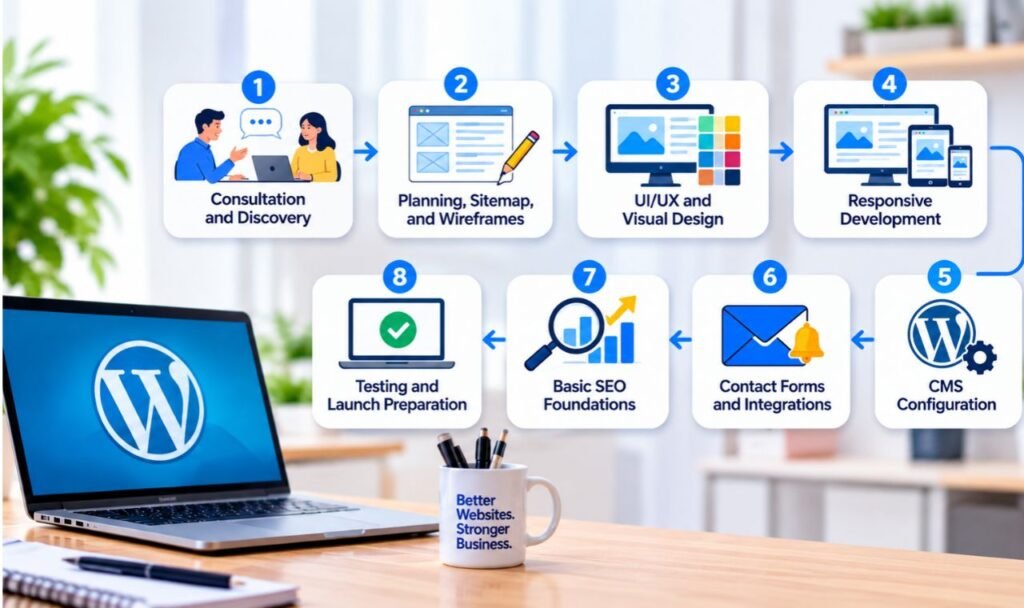
Professional website design services cover planning, design, development, testing, and launch. They go well beyond choosing colors, fonts, and images. Here’s what each stage should put in your hands.
- Consultation and discovery. A real conversation about your customers, services, and competitors, with notes you can approve.
- Planning, sitemap, and wireframes. A page list plus simple layouts showing where headings, forms, and buttons sit. Changes are cheap here and expensive later.
- UI/UX and visual design. The look of each page template and the visitor’s route to an enquiry.
- Responsive development. The approved design built into a working site that adapts to any screen.
- CMS configuration. A content management system, often WordPress, set up so you can edit text and images yourself.
- Contact forms and integrations. Enquiry forms, booking tools, and notifications tested.
- Basic SEO foundations. Page titles, headings, clean URLs, and indexability checks. These are foundations, not ranking promises.
- Testing and launch preparation. Device and browser checks, form tests, fixes, and your final sign off.
What Should You Expect From a Website Design Package?
Website design services are usually sold as packages, which are just bundles of deliverables with a price attached. The list matters more than the label. GoDaddy’s published web design plans, for example, list a page limit and a single round of revisions, a handy reminder to check both in any proposal.
Also look for tablet and mobile layouts, CMS access, approval stages, and a final handover with logins and files. When you compare website design services side by side, sort every line of the quote into one of these columns.
| Essential inclusions | Optional extras | Clarify before signing |
| Agreed page count and templates | Logo and brand identity work | Who writes content and supplies images? |
| Custom layout built around your brand | Copywriting and photography | How many revision rounds are included? |
| Mobile, tablet, and desktop layouts | Ecommerce or booking features | Whether themes or plugins carry license fees |
| CMS access with a short guide | Ongoing SEO | Who owns the design files and admin access? |
| Tested forms and basic technical SEO | Maintenance care plans | Hosting, domain and renewal duties, and what happens if scope changes |
How Much Do Website Design Services Cost?
There isn’t one honest universal price. I’m deliberately not publishing a price list, because figures on agency blogs reflect that agency’s market, currency, and quote format. They’re estimates at best, not a quotation for your project. Ask for itemised quotes built from the same brief.
These factors move the price of website design services the most:
- Number of pages. More pages mean more design, content, and testing.
- Custom design versus prebuilt themes. A theme starts from an existing layout, so it’s faster and cheaper. Custom design starts from your customers and content.
- Website platform and e-commerce. WordPress, Shopify, and hand coded builds cost differently, and products, payments, and stock control add scope quickly.
- Complexity and integrations. Booking systems, portals, CRMs, and email platforms each need engineering and testing.
- Content, photography, and SEO. Often excluded, and sometimes the highest hidden cost.
- Maintenance and support. A care plan adds a yearly cost and removes emergency bills.
This table shows how those factors shape three common types of website design services.
| Project type | Typical functionality | Suitable for | What raises the budget |
| Basic website or landing page | One to five pages, contact form | Sole traders, new businesses, single campaigns | Custom design, copywriting, booking tools |
| Professional small business website | Service pages, CMS, forms, analytics | Established local and professional service businesses | More service pages, photography, integrations |
| Advanced custom or ecommerce project | Online store, accounts, payments | Growing companies, retailers, complex processes | Product volume, custom features, security needs |
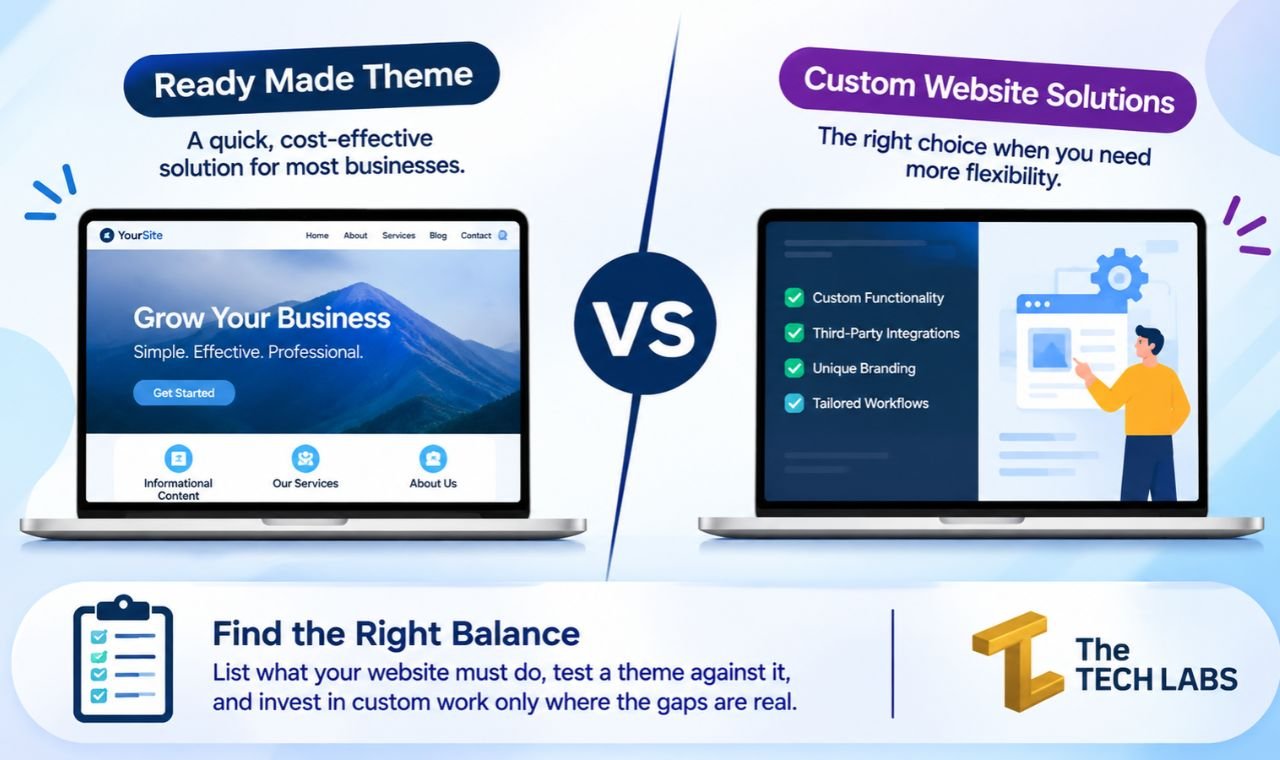
Are custom website design services worth the extra? If the site is your main source of leads, your services need careful explanation, or your brand is a selling point, custom design usually earns its cost. For a local business with a simple offer, a well configured theme with your own branding can be a sensible middle path.
What Costs Are Often Missing From a Website Design Quote?
A quote for website design services that says nothing about the items below isn’t dishonest. It’s just incomplete. Ask about each one and ask whether it recurs.
- Domain registration and hosting. Recurring. GoDaddy’s published design plans, for example, pair a one time build fee with an annual hosting fee.
- Premium themes, plugins, and third party software. Often yearly licences, while booking, email, and form tools may charge monthly.
- Content writing and professional photography. Usually one time, though new pages later need more.
- Advanced integrations. One time to build, sometimes with recurring platform fees.
- Website maintenance and ongoing SEO. Both recurring, since software and search results keep moving.
- Additional revisions and new functionality. Charged per request once included rounds run out.
As a rule, the build is the one time part. Hosting, domains, licenses, maintenance, and marketing come back every year.
Website Design Tips for Service Based Businesses
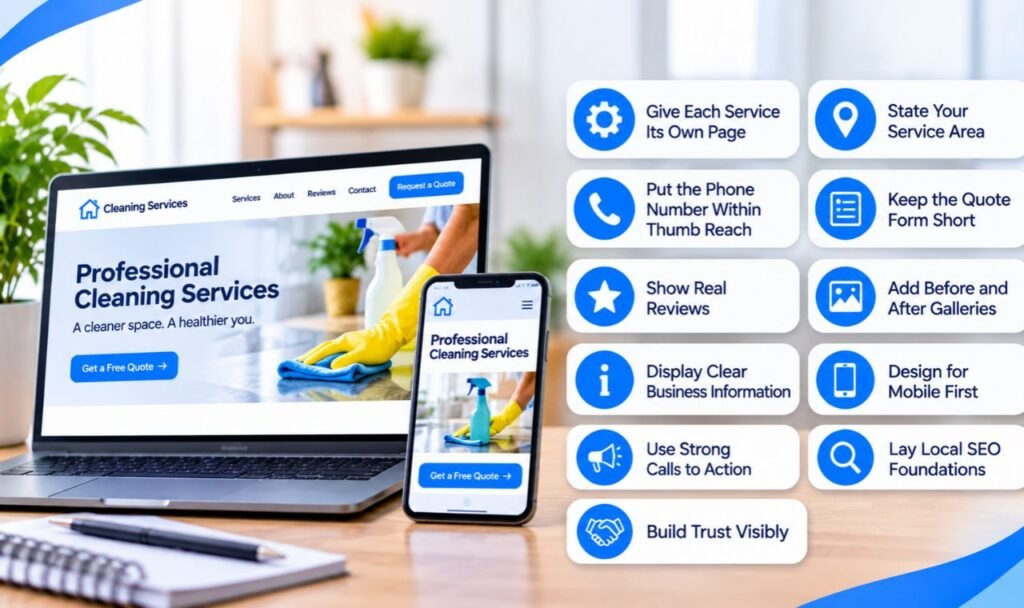
These website design tips for service based businesses come down to one idea. Your visitor is deciding who to call, often on a phone and often in a hurry. Website design services for plumbers, contractors, landscapers, consultants, cleaning companies, and HVAC businesses all face this. Looks alone don’t solve it. A clear path does.
- Give each service its own page. AC repair and AC installation deserve separate pages, not one general services page.
- State your service area plainly. List the cities or neighbourhoods you cover, so nobody has to phone to ask.
- Put the phone number within thumb reach. A click to call button in the header saves copying numbers.
- Keep the quote form short. Name, phone, service, and preferred time are often enough.
- Show real reviews. Add a name or initials, the service, and the area.
- Add before and after galleries. Label each project with the work type and location.
- Display clear business information. Address, hours, licences, and insurance are written the same way everywhere.
- Design for mobile first. Many visitors arrive on a phone, so start there.
- Use strong calls to action. Tell people what happens next, such as “Request a quote.”
- Lay local SEO foundations. Mention locations on relevant pages and keep your Google Business Profile consistent.
- Build trust visibly. Certifications, memberships, and guarantees you can honour.
Picture a cleaning company with one page that says “We offer cleaning.” A visitor wants a move out deep clean. A dedicated page can explain what’s included, which areas are covered, and how booking works, then end with a short form. That’s the difference between a brochure and a lead generation website. It’s an illustration, not a case study.
Best Practices for Building a Professional Services Website
Best practices for building a professional services website matter because clients often judge credibility before they ask about price. Good website design services tie each practice below to a visitor need or a business goal.
- Clear positioning. Say who you help and what you do on the first screen.
- Easy navigation and consistent branding. Keep the menu short, don’t bury key services, and keep colours and tone consistent.
- Accessible design and readable typography. Good contrast, labelled form fields, and comfortable text sizes help more people use the site.
- Fast loading and mobile responsiveness. Compressed images and tappable buttons keep enquiries coming.
- Clear conversion paths. Every page should point to one next step, such as a call, form, or booking.
- Useful content and trust signals. Answer real customer questions and show credentials, reviews, and named team members.
- Analytics and conversion tracking. Without tracked calls and form submissions, you can’t tell which pages produce enquiries.
What Technical Features Should Be Included Before Launch?
Ask whether launch checks are part of the website design services you’re buying, and get the checklist in writing. At minimum, it should cover the following.
- SSL and HTTPS. Encrypted connections, so browsers don’t warn visitors.
- Responsive, browser, and form testing. Real phones and tablets, major browsers, and every form submitted to confirm the right inbox receives it.
- Image compression and page performance. Google’s Core Web Vitals measure loading, responsiveness, and visual stability. Ask how they test, and be cautious of anyone who promises a specific score.
- Backups and security. Copies stored away from the live server, updated software, strong admin passwords, and limited user roles.
- On page SEO, sitemap, and indexability. Unique titles, descriptions, and headings; an XML sitemap; crawlable pages; and no leftover staging block.
- Analytics, broken links, and accessibility. Goals set up, no dead pages, and checks for contrast, labels, and keyboard use.
Launch preparation is a one time job. Ongoing technical management keeps the site healthy afterwards through updates, monitoring, and backups. Neither guarantees search rankings.
Schema Types for Professional Services and Design Agencies
Structured data is extra code that labels the facts on a page, so search engines can tell a phone number from a price. It usually sits in a block of JSON-LD that visitors don’t see, and good website design services include it.
These are the schema types that suit most service businesses and design agencies.
- Organization. Business identity, including name, logo, website, and contact details.
- Local business and its subtypes. For businesses with a location or service area. Google’s documentation on LocalBusiness structured data advises using the most specific subtype available, such as Plumber or Electrician.
- Schema.org also notes that the general ProfessionalService type for local businesses was deprecated because it was confused with Service. For a design agency, plain LocalBusiness or Organization is usually safer.
- Service. One entry per offering, such as website redesign.
- WebSite. Site level details such as the name and main URL.
- BreadcrumbList. The navigation trail on a page, such as Home, Services, Website Design.
Every value in square brackets is a placeholder.
{
“@context”: “https://schema.org”,
“@type”: “LocalBusiness”,
“name”: “[Your Business Name]”,
“url”: “[https://www.yourwebsite.com/]”,
“logo”: “[https://www.yourwebsite.com/logo.png]”,
“telephone”: “[+country code and phone number]”,
“description”: “[One sentence describing what you do]”,
“address”: {
“@type”: “PostalAddress”,
“streetAddress”: “[Street address]”,
“addressLocality”: “[City]”,
“addressRegion”: “[State or province]”,
“postalCode”: “[Postal code]”,
“addressCountry”: “[Country code]”
},
“areaServed”: “[City or region you serve]”
}
Use real details that also appear on your visible pages, because schema should mirror what visitors see. It doesn’t guarantee rich results or better rankings, and Google says structured data features aren’t guaranteed to appear in search.
How to Compare Website Design Agencies Before Hiring One?
Website design services can look identical on a sales page, so compare evidence rather than enthusiasm.
- Relevant portfolio experience. Ask for live links to similar projects and open them on your phone.
- Clear scope and transparent pricing. Pages, features, content duties, and exclusions are written down, with recurring costs itemised.
- Communication and timelines. Who is your contact, and what could delay the schedule?
- Design, development, and SEO skills. What’s done in house, and can they explain redirects and page speed in plain language?
- Revisions, ownership, and admin access. You should hold the admin login and know who owns the files.
- Support after launch. What’s covered, for how long, and at what price?
For larger builds with logins, portals, or custom features, our guide on choosing a software house in Karachi covers proposal comparison and what to put in an agreement.
Before you approve a proposal, ask these questions:
- Which pages and features are included, and which aren’t?
- Is the design custom or based on a prebuilt theme?
- Who writes the content and supplies the images?
- How many revision rounds are included, and what do extra rounds cost?
- Will I receive administrator access, and who owns the files and domain?
- What hosting, licenses, and renewals will I pay for each year?
- What testing happens before launch, and what support follows?
Any provider of website design services should answer all seven without fuss.
What Should Happen After Your Website Goes Live?
A website isn’t finished at launch, and most website design services stop there unless support is agreed separately. Afterwards, you’ll need software and plugin updates, security monitoring, regular backups, bug fixes, performance monitoring, content updates, technical support, and future improvements.
Keep three things separate. Website maintenance keeps the site safe and working. Ongoing SEO is marketing work such as content and local listings. Additional development means new features or integrations. Agree in writing which part of your website design services the agency provides and who handles the rest.
Why Choose The Tech Labs for Website Design Services?
The Tech Labs describes itself as a development, design, and marketing consultancy based in Karachi, Pakistan. If you’re elsewhere, ask how a remote project would work. Its website design services cover landing pages, lead generation pages, and e-commerce page design, and its WordPress and custom website development work extends to Shopify, BigCommerce, Laravel, and React, alongside SEO, graphic design, and content writing. Having design, development, and marketing under one provider means fewer handovers between suppliers, and your pages can be planned with search visibility in mind from day one. If you’re planning a new site or a redesign, discuss your requirements for website design services with The Tech Labs and ask for a scoped, itemised proposal.
The Short Version
The cheapest quote isn’t always the weakest, and the most expensive isn’t always the best. Written specifics separate good quotes from vague ones. When you compare website design services, count the pages, revisions, ownership terms, recurring costs, and support after launch, then choose the proposal you understand best.
Frequently Asked Questions
Q. What do website design services usually include?
Website design services usually cover discovery, a sitemap, wireframes, visual design, responsive development, CMS setup, forms, basic SEO, and testing. Ask for page count, revision rounds, and handover items in writing.
Q. How much should a professional business website cost?
Prices for website design services depend on pages, custom design, platform, integrations, content, and support, so there’s no single fair figure. Compare itemised quotes for the same brief instead of averages from blog posts.
Q. Is custom website design better than using a template?
Not always. Custom website design services suit complicated offers and strong brands, while a well adapted template can work for a simple local business.
Q. What should service based businesses look for on a website?
Look for dedicated service pages, clear service areas, click to call buttons, short quote forms, real reviews, and mobile layouts that work.
Q. Why should businesses choose The Tech Labs for website design services?
The Tech Labs is a consultancy based in Karachi that lists website design services alongside development, SEO, graphic design, and content writing. That mix may suit businesses wanting one provider, though you should still compare scope and proposals.
- Website Design Services: What You Should Get for the Money
 Two agencies can quote very different prices for what sounds… Continue reading Website Design Services: What You Should Get for the Money